
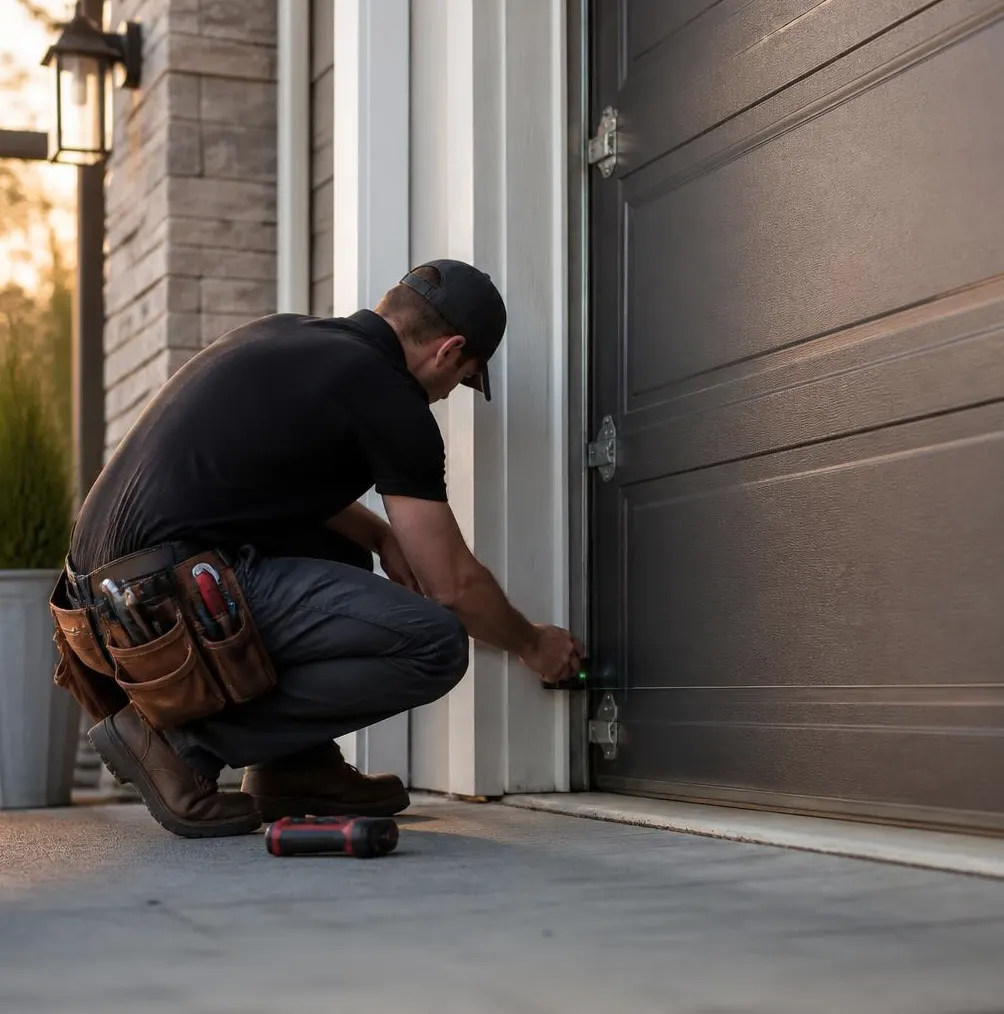
What a Technician Sees This Time of Year
A typical November call starts the same way: a homeowner opens the garage on a cool, dry morning and the door groans, jerks, or catches halfway up. Nine times out of ten, it's not a broken part — it's the aftermath of six months of humidity, afternoon downpours, and heat finally showing up as the air dries out and temperatures start swinging between warm afternoons and chilly nights. Hardware that was fine in August starts squealing in November because the lubricant that worked in thick, humid air gets gummy and stiff once the moisture drops.
Land O' Lakes doesn't get a hard winter, but the shift from hurricane-season humidity to drier, cooler stretches is real, and it's hard on a system that's been swelling and contracting all summer. A little attention now prevents the mid-winter service call where a spring finally lets go or an opener stops responding altogether.
Check the Weatherstripping While It's Still Flexible
The rubber seal along the bottom of the door and around the panels takes a beating from summer humidity and afternoon storms. By late fall it's often cracked, flattened, or pulling away from the track, even if it looks fine at a glance.
- Run a hand along the bottom seal — if it's hard or brittle instead of pliable, it's past its useful life.
- Look for gaps at the corners where rain and small pests can get in during cooler nights when critters look for shelter.
- Replace worn weatherstripping before temperatures dip further; cold rubber is harder to fit correctly than rubber that's still a little warm and flexible.
Look for Rust That Started During Hurricane Season
Humid air, salt-tinged breezes, and storm runoff all season long mean hinges, rollers, and track bolts have had months to start corroding, even on doors that look clean. Rust doesn't announce itself until a hinge seizes or a roller starts grinding in its track.
- Inspect hinges, roller stems, and the track for orange discoloration or flaking.
- Wipe down the track and hardware with a dry cloth before applying anything — trapped moisture under old lubricant is a common cause of rust spreading faster than expected.
- Tighten any bolts that have loosened from months of vibration and temperature swings; swollen wood-framed openings can shift hardware slightly over a humid season.
Lubricate Before the Dry Air Sets In
Summer's moisture masks a lot of friction. Once the air dries out, parts that were quietly struggling all year suddenly sound like it. This is the single most skipped step homeowners can do themselves.
- Use a silicone-based garage door lubricant on hinges, rollers, and the torsion spring — avoid household oils like WD-40 as a long-term lubricant since they attract dust and grit.
- Lubricate the track sparingly; too much buildup collects debris blown in during cooler, breezy days.
- Do this every few months, but fall is a natural checkpoint since it follows the wettest stretch of the year.
Test the Balance and Auto-Reverse
A door that's out of balance works harder on the opener and the springs, and cooler mornings tend to reveal it first because metal contracts slightly and tolerances tighten.
- Disconnect the opener and lift the door manually halfway. It should hold its position. If it drifts up or falls, the springs are compensating poorly for the door's weight.
- Place a block of wood under the door and run the closing cycle. The door should reverse immediately on contact. If it doesn't, the sensors or force settings need adjustment before the issue becomes a safety problem.
- Check the photo-eye sensors near the bottom of the track for dust or spiderwebs — common after a summer of open garage doors and bugs looking for shelter as it cools off.
Inspect the Opener and Remote Batteries
Heat and humidity shorten battery life faster than most people expect, and a remote that's been sluggish since August often just needs fresh batteries before winter use ramps up with more holiday coming and going.
- Replace remote and keypad batteries as a matter of course this time of year.
- Listen for grinding or stalling during the open/close cycle — it's often the first sign the opener motor or drive gear is wearing out.
- Confirm the wall-mounted safety release still works smoothly in case of a power outage during a late-season storm.
When to Call Land O' Lakes Garage Door
If the door is hesitating, the springs look stretched or rusted, or the opener is making noise that wasn't there a few months ago, it's worth having it looked at before a minor issue turns into a stuck door on a Saturday morning. Land O' Lakes Garage Door handles garage door maintenance visits that cover exactly this kind of seasonal wear — lubrication, hardware tightening, balance checks, and weatherstripping replacement — along with spring replacement for homeowners who find rust or fraying that's gone past the point of a quick fix. We also handle garage door opener repair when the motor or sensors need more than a battery swap.
If your garage door has been acting up as the weather shifts, call Land O' Lakes Garage Door and get it sorted before the next cold snap or storm rolls through Land O' Lakes, FL.